 locatello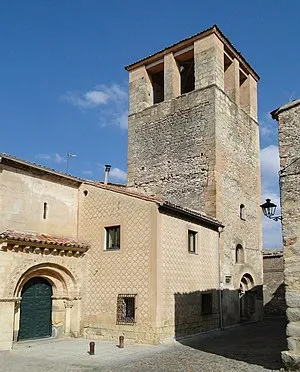
Ontdek de historische schatten van Segovia

Reiseführer
Jenny Multilingual
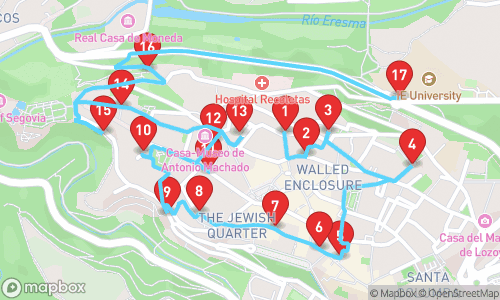
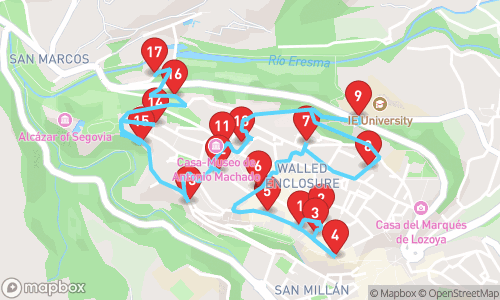
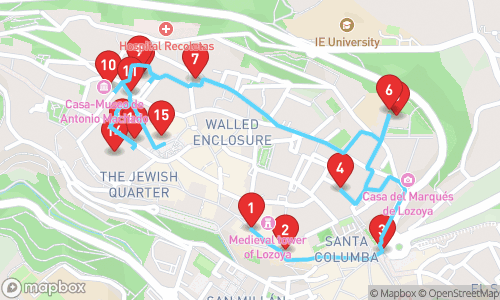
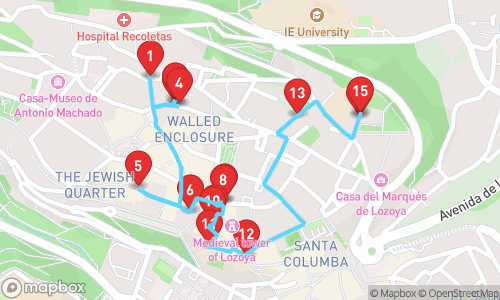
Welcome to Segovia! On this GPS guided audio tour, we will visit 15 stops on a route of 1.9km. This tour focusses mainly on general tourism.
Locatello ist eine App, mit der Sie persönliche Audiotouren erstellen können. Legen Sie Ihre bevorzugte Distanz, Ihren Reiseführer, die Sprache und das Thema fest, und eine Tour wird sofort erstellt.
Gehzeit
Entfernung
Stopps
Sprache
Tour Stops
Church of San Quirce
A church building of Romanesque style, dating back to the 12th century, featuring a unique design with a tower and a small chapel, which was abandoned as a place of worship and repurposed as an almacén, then restored and now serves as the headquarters of the Real Academia de Historia y Arte de San Quirce.
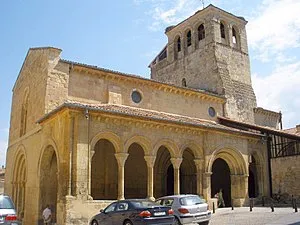
Church of the Santísima Trinidad
A Romanesque church building featuring a single nave, a curved apse, and a southern atrium, with a Gothic chapel and Baroque sacristies added later. Its exterior is adorned with decorated arches, columns, and a cornice with fantastical or real figure representations.
Convent of Santo Domingo el Real, Segovia
A convent of clausura located in Segovia, housing the Torre de Hércules, a cultural interest since 1931. The convent features a style XVI-century church with a single nave and houses a Parthenon-style sculpture of Hércules.
Plaza de la Trinidad (Segovia)
A charming public square in Segovia shared its name with the adjacent Iglesia de la Santísima Trinidad, surrounded by streets like Calle de la Rosa and Capuchinos Alta.
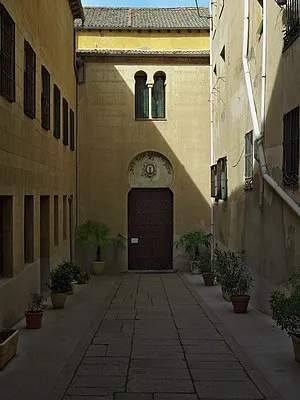
old main synagogue
A monastery and former synagogue dating to the 14th century, featuring Moorish-style architecture with rectangular shape and three naves, with a courtyard entrance and vegetal-decorated capitals.
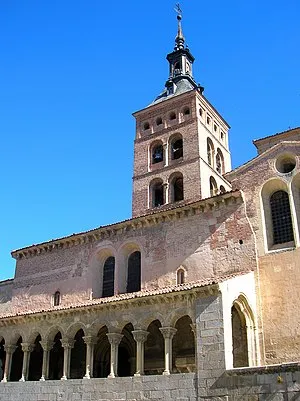
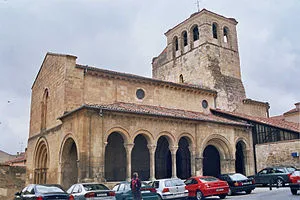
Church of San Martín
A church building of Mozarabic origin with Romanesque style, constructed in the 12th century and existing since 1117, featuring a triple nave, a cimborrio and a narrow gallery portico.
Audio Preview
30 sec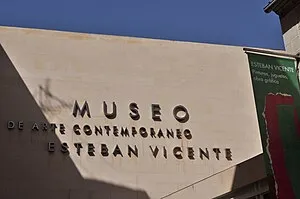
Museo de Arte Contemporáneo Esteban Vicente
A museum showcasing the art of Esteban Vicente, a prominent Spanish-American artist, featuring a collection of 153 of his works, including oil paintings, drawings, and watercolors, covering his artistic evolution from figurative to post-cubist and post-impressionist styles.
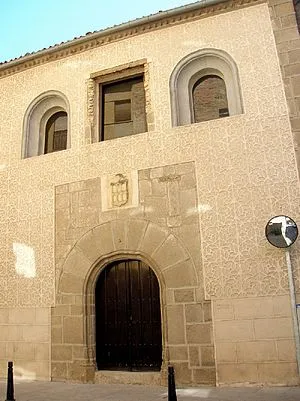
Palacio de Enrique IV, Segovia
A 15th-century palace, constructed for King Enrique IV of Castilla, featuring a mudéjar style with an anarchic organization of various palaces connected by open spaces, showcasing ornate decorations and armorial bearings.
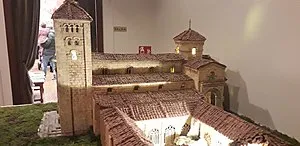
Old Cathedral of Segovia
A former cathedral, the Old Cathedral of Segovia is a Gothic edifice with a square plan and five tracts of gallery topped with simple cross-ribbed vaults.
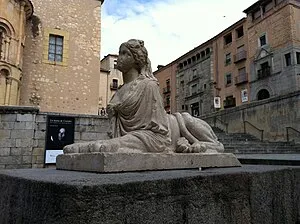
Sirenas de Segovia
A pair of sculptures by Francisco Bellver, created in 1852, depicted as sirens, yet more resembling sphinxes, with female-like heads and breasts, bird-like wings, and lion-like bodies and feet.
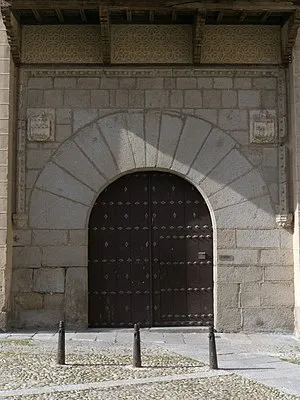
Alhóndiga de Segovia
A Gótico-Industrial building constructed in the early 16th century, serving as an almacén de grano for Segovia, now functions as a exhibition space, cultural center, and archives, making it a valuable cultural and historic asset.
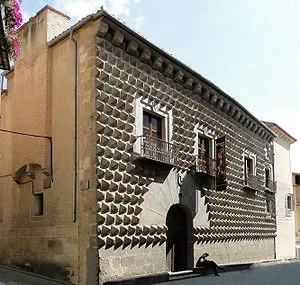
Casa de los Picos
A mansion built in the late 15th century, known for its unique granite façade with 617 pi-shaped protrusions and a Renaissance-style courtyard, decorated with Talavera tiles featuring iconic Segovian buildings.
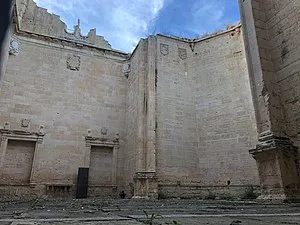
Convent of San Agustín
A former Augustinian friary, the Convent of San Agustín in Segovia was a monastery built between 1570 and 1600, featuring a Gothic-Renaissance style church with a single nave, chapels, and a semihexagonal apse.
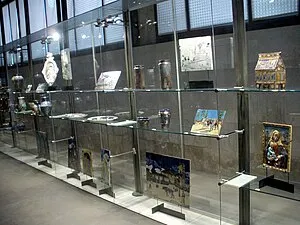
Museo Zuloaga
A museum showcasing Spanish ceramics from the early 20th century, featuring approximately 150 pieces, as well as works by painter Ignacio Zuloaga, housed within a historic Visigothic church in Segovia.
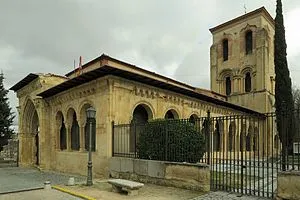
Church of San Juan de los Caballeros
A Romanesque church in Segovia, it was a Catholic temple before being converted into the Zuloaga Museum. Futhermore, it was declared a monumento histórico-artístico in 1931 and currently holds the status of Bien de Interés Cultural.
App herunterladen
Erleben Sie diese Tour und viele weitere mit unserer mobilen App. Verfügbar für iOS und Android.
Audio-Vorschau
Tourkarte
Schnelle Fakten
- ✓GPS-geführte Navigation
- ✓Professionelle Audiokommentare
- ✓Offline-Karten verfügbar
- ✓Premium content included
Warum Diese Tour Wählen
Lokaler Experte
Erzählt von Jenny Multilingual, spezialisiert auf allgemeinen Tourismus
Flexible Zeiten
Machen Sie die Tour in Ihrem eigenen Tempo, zu jeder Tageszeit