 locatello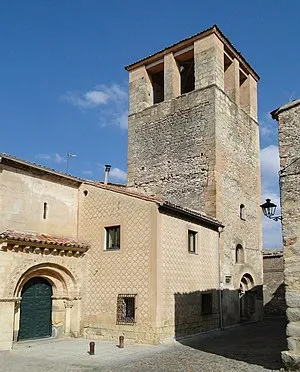
Ontdek de historische schatten van Segovia

Guía turístico
Jenny Multilingual
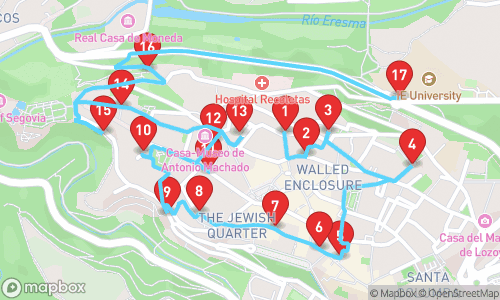
Welcome to Segovia! On this GPS guided audio tour, we will visit 15 stops on a route of 1.9km. This tour focusses mainly on general tourism.
Locatello es una aplicación donde puedes generar recorridos guiados con audio personalizados. Establece tu distancia preferida, guía, idioma y tema, y se crea un recorrido al instante.
Tiempo de caminata
Distancia
Paradas
Idioma
Tour Stops
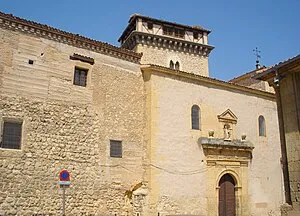
Church of San Quirce
A church building of Romanesque style, dating back to the 12th century, featuring a unique design with a tower and a small chapel, which was abandoned as a place of worship and repurposed as an almacén, then restored and now serves as the headquarters of the Real Academia de Historia y Arte de San Quirce.
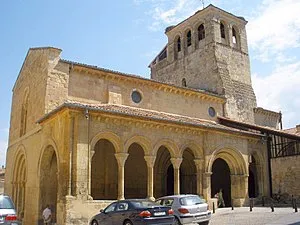
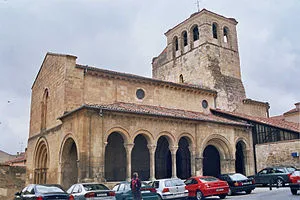
Church of the Santísima Trinidad
A Romanesque church building featuring a single nave, a curved apse, and a southern atrium, with a Gothic chapel and Baroque sacristies added later. Its exterior is adorned with decorated arches, columns, and a cornice with fantastical or real figure representations.
Audio Preview
30 secConvent of Santo Domingo el Real, Segovia
A convent of clausura located in Segovia, housing the Torre de Hércules, a cultural interest since 1931. The convent features a style XVI-century church with a single nave and houses a Parthenon-style sculpture of Hércules.
Plaza de la Trinidad (Segovia)
A charming public square in Segovia shared its name with the adjacent Iglesia de la Santísima Trinidad, surrounded by streets like Calle de la Rosa and Capuchinos Alta.
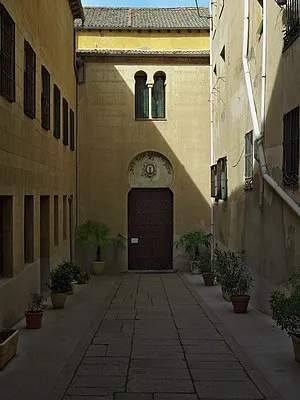
old main synagogue
A monastery and former synagogue dating to the 14th century, featuring Moorish-style architecture with rectangular shape and three naves, with a courtyard entrance and vegetal-decorated capitals.
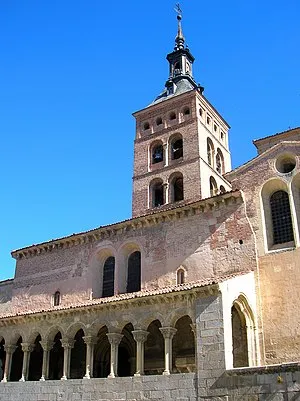
Church of San Martín
A church building of Mozarabic origin with Romanesque style, constructed in the 12th century and existing since 1117, featuring a triple nave, a cimborrio and a narrow gallery portico.
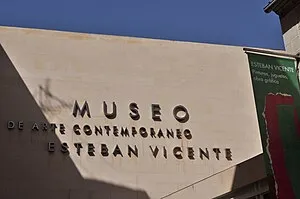
Museo de Arte Contemporáneo Esteban Vicente
A museum showcasing the art of Esteban Vicente, a prominent Spanish-American artist, featuring a collection of 153 of his works, including oil paintings, drawings, and watercolors, covering his artistic evolution from figurative to post-cubist and post-impressionist styles.
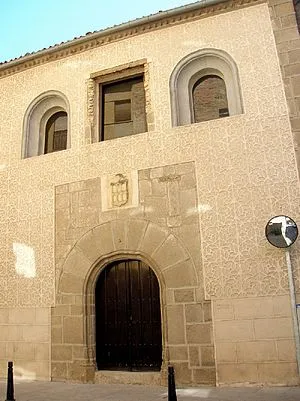
Palacio de Enrique IV, Segovia
A 15th-century palace, constructed for King Enrique IV of Castilla, featuring a mudéjar style with an anarchic organization of various palaces connected by open spaces, showcasing ornate decorations and armorial bearings.
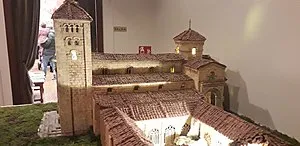
Old Cathedral of Segovia
A former cathedral, the Old Cathedral of Segovia is a Gothic edifice with a square plan and five tracts of gallery topped with simple cross-ribbed vaults.
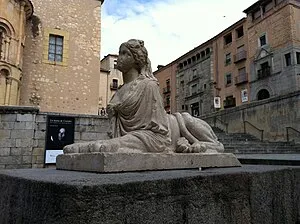
Sirenas de Segovia
A pair of sculptures by Francisco Bellver, created in 1852, depicted as sirens, yet more resembling sphinxes, with female-like heads and breasts, bird-like wings, and lion-like bodies and feet.
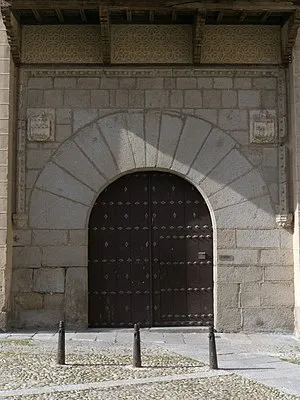
Alhóndiga de Segovia
A Gótico-Industrial building constructed in the early 16th century, serving as an almacén de grano for Segovia, now functions as a exhibition space, cultural center, and archives, making it a valuable cultural and historic asset.
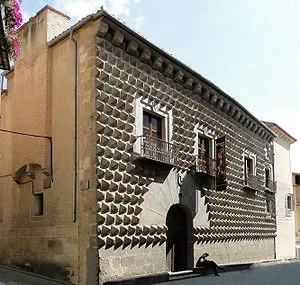
Casa de los Picos
A mansion built in the late 15th century, known for its unique granite façade with 617 pi-shaped protrusions and a Renaissance-style courtyard, decorated with Talavera tiles featuring iconic Segovian buildings.
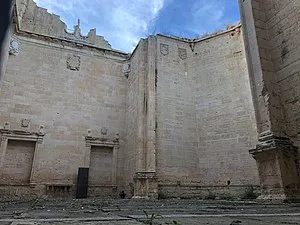
Convent of San Agustín
A former Augustinian friary, the Convent of San Agustín in Segovia was a monastery built between 1570 and 1600, featuring a Gothic-Renaissance style church with a single nave, chapels, and a semihexagonal apse.
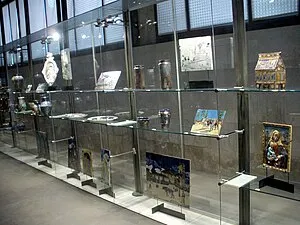
Museo Zuloaga
A museum showcasing Spanish ceramics from the early 20th century, featuring approximately 150 pieces, as well as works by painter Ignacio Zuloaga, housed within a historic Visigothic church in Segovia.
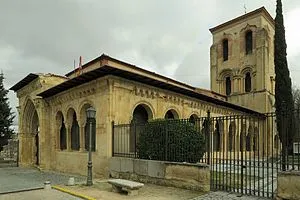
Church of San Juan de los Caballeros
A Romanesque church in Segovia, it was a Catholic temple before being converted into the Zuloaga Museum. Futhermore, it was declared a monumento histórico-artístico in 1931 and currently holds the status of Bien de Interés Cultural.
Descargar App
Experimenta este recorrido y muchos más con nuestra aplicación móvil. Disponible para iOS y Android.
Vista previa de audio
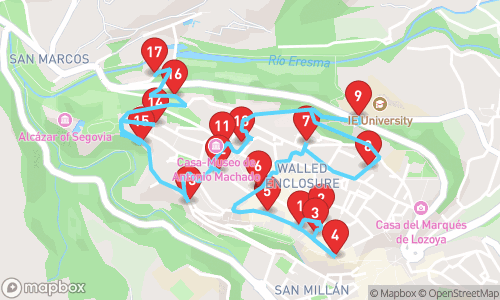
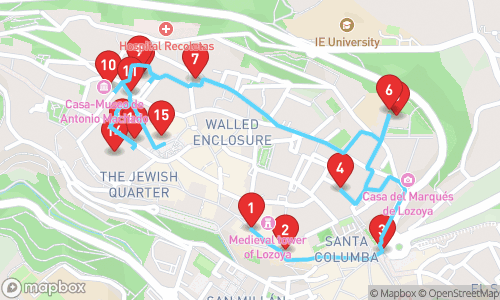
Mapa del recorrido
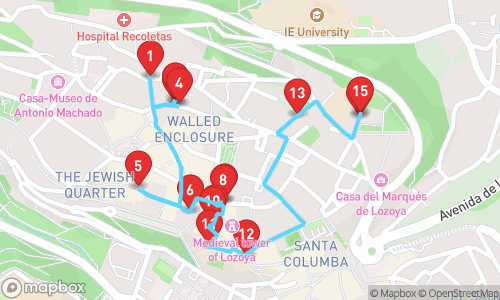
Datos rápidos
- ✓Navegación guiada por GPS
- ✓Narración de audio profesional
- ✓Mapas disponibles sin conexión
- ✓Premium content included
Por qué elegir este recorrido
Guía local experta
Narrado por Jenny Multilingual, especializada en turismo general
Horarios flexibles
Haz el recorrido a tu propio ritmo, en cualquier momento del día